
I've hit my personal workload limit, and here's where it shows
A few days ago I sat down to write my plans and to-do list for the rest of August. Going through it, I realized I'd missed a few things. That's not an accident.
It's a sign I've reached a limit, as one person doing all of this alone. There are a few reasons this happened right now, and a few things I should do about it.
Granted, I did build the most stupid thing ever over the weekend, but that was just a one-time thing.
Twenty years ago I used to work 14 to 16 hours a day. I was in full achievement mode, hungry for money and fame that never showed up. But the grit paid off anyway.
I'm not getting any younger. Mid-40s is no joke. And the things I build now aren't built out of necessity the way they used to be. They're built because I'm passionate about them, even as my career has pivoted between building products and writing about building them.
So I've hit a friction point. A point where I've reached my personal limit for how much I want to work in a day. Some of that is deliberate. Some of it, I'm realizing now, just fell out of my head while I was writing my planning in update #8.
What I've neglected
The indie hacker blog is first on the list. My last post there was more than two weeks ago, which is bad.
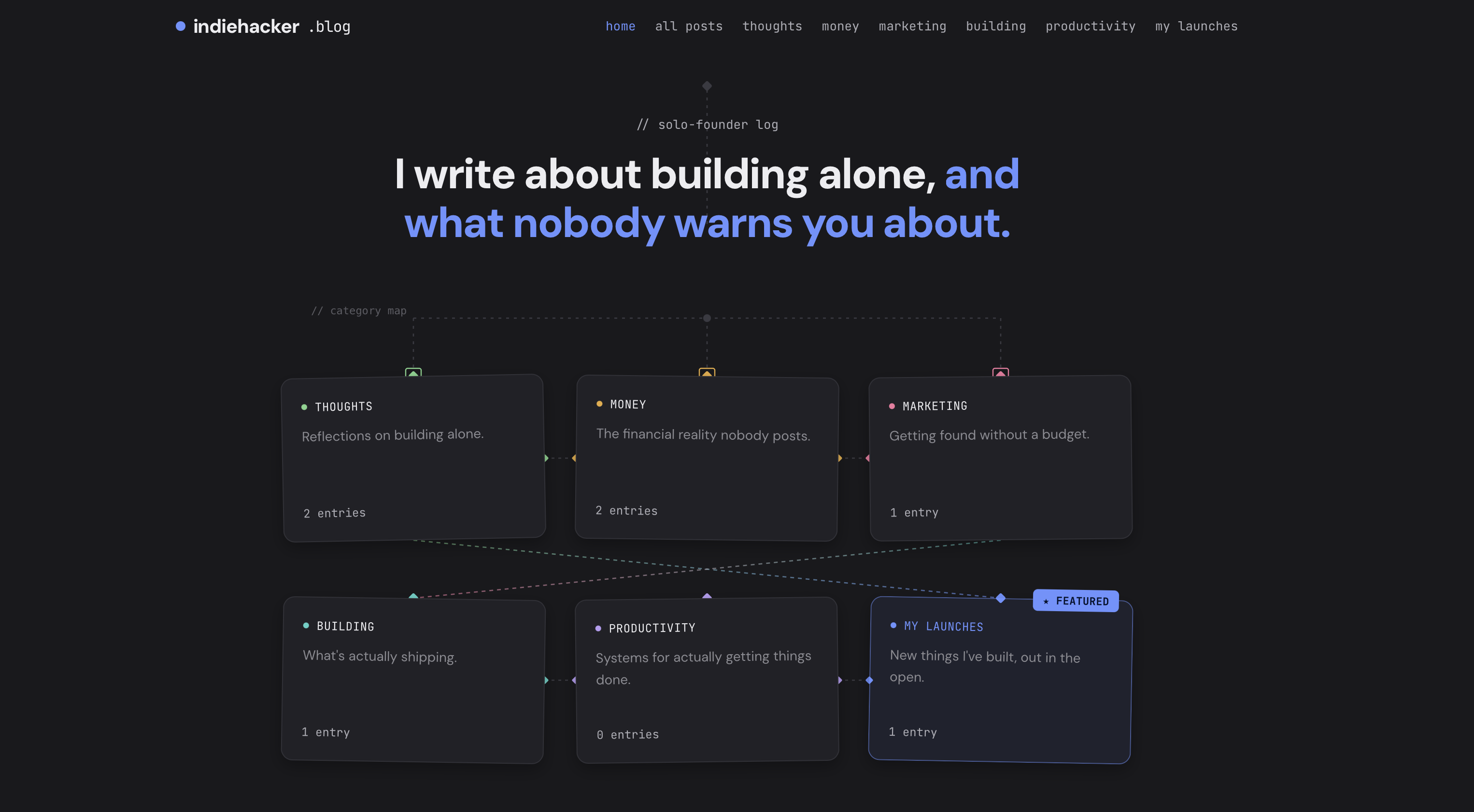
But when I checked Google Search Console and saw zero visitors, it was a relief. Ironic, since this is the blog I built specifically to kickstart my own tiny publishing network.
StreetPoint Blog is next. I've only published one post there, on July 25, when I'd promised myself one a week.
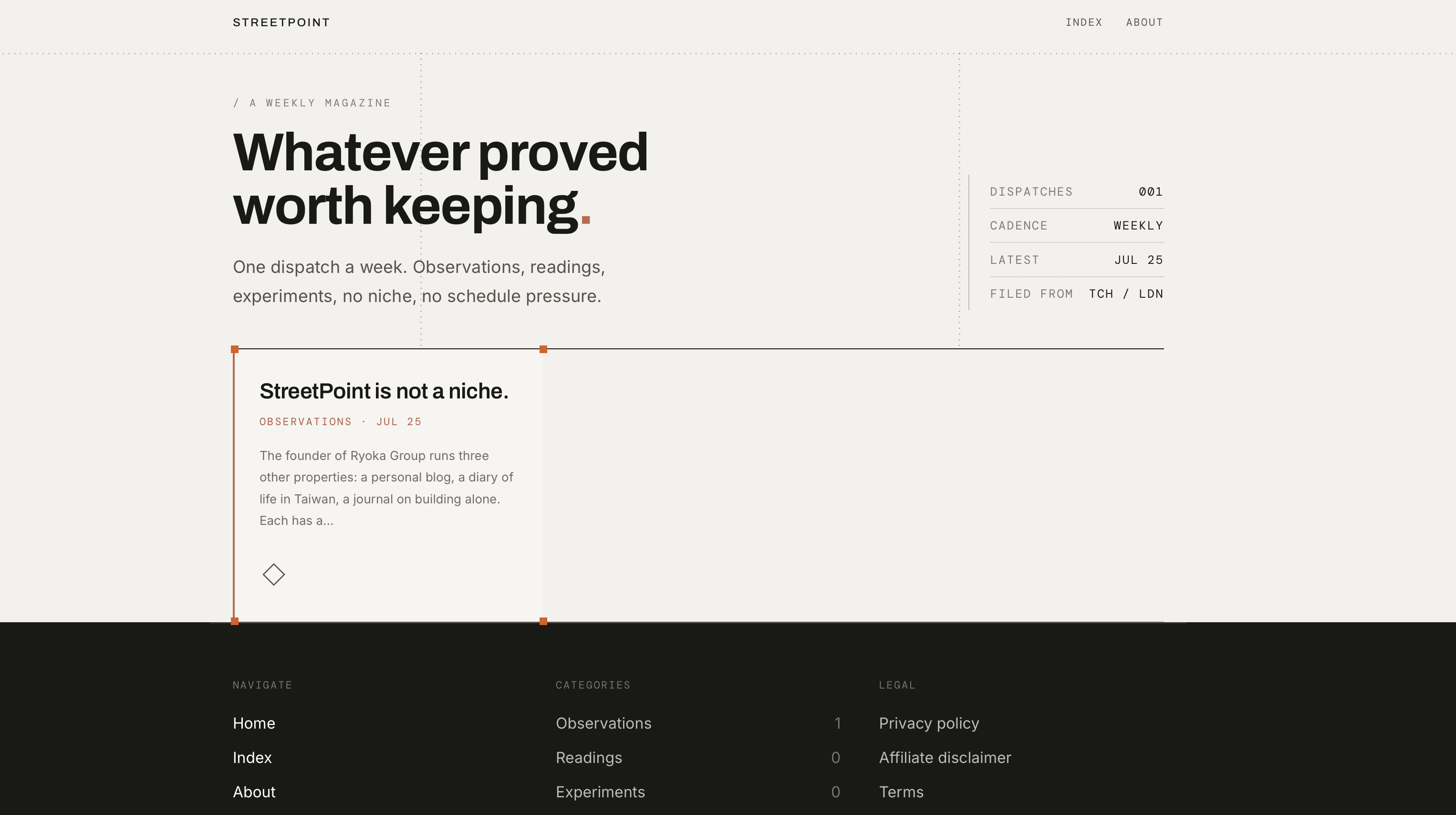
Not great, but I think it's fine for now. I can recover from this.
Kiroka, the free subscription tracker I built, comes third on the neglected list. I haven't added enough tools to the database for people to explore. More importantly, I never went back to do a proper sanity check.
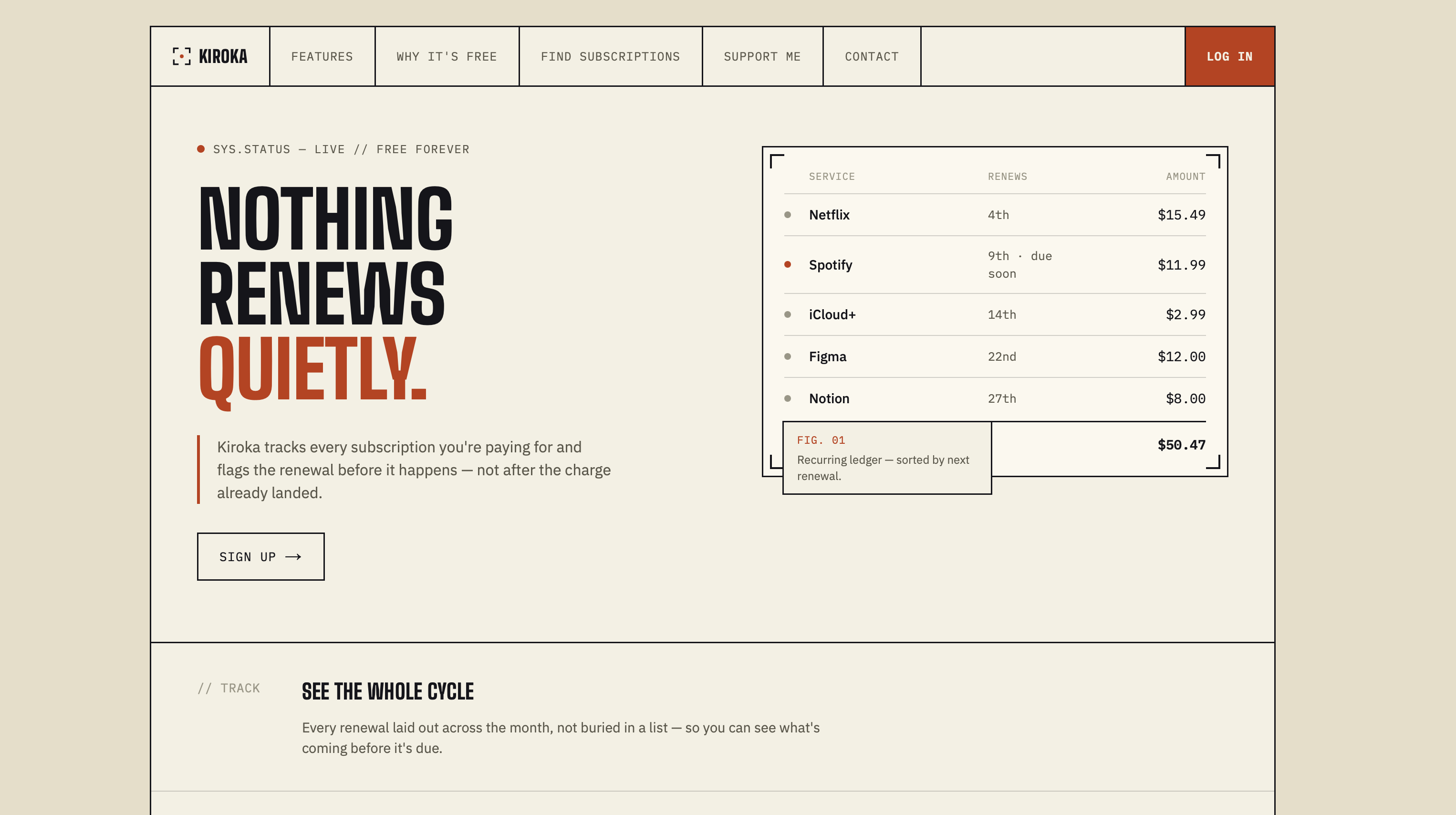
By that I mean I was supposed to iron out a few details and clean up some UI and UX issues. Right now I genuinely don't know if anyone has even signed up. I have no way to check. Maybe that's not the end of the world, since I'm not charging anything for it.
Harova is next. A month ago I set a goal of adding a new SaaS tool every two days.
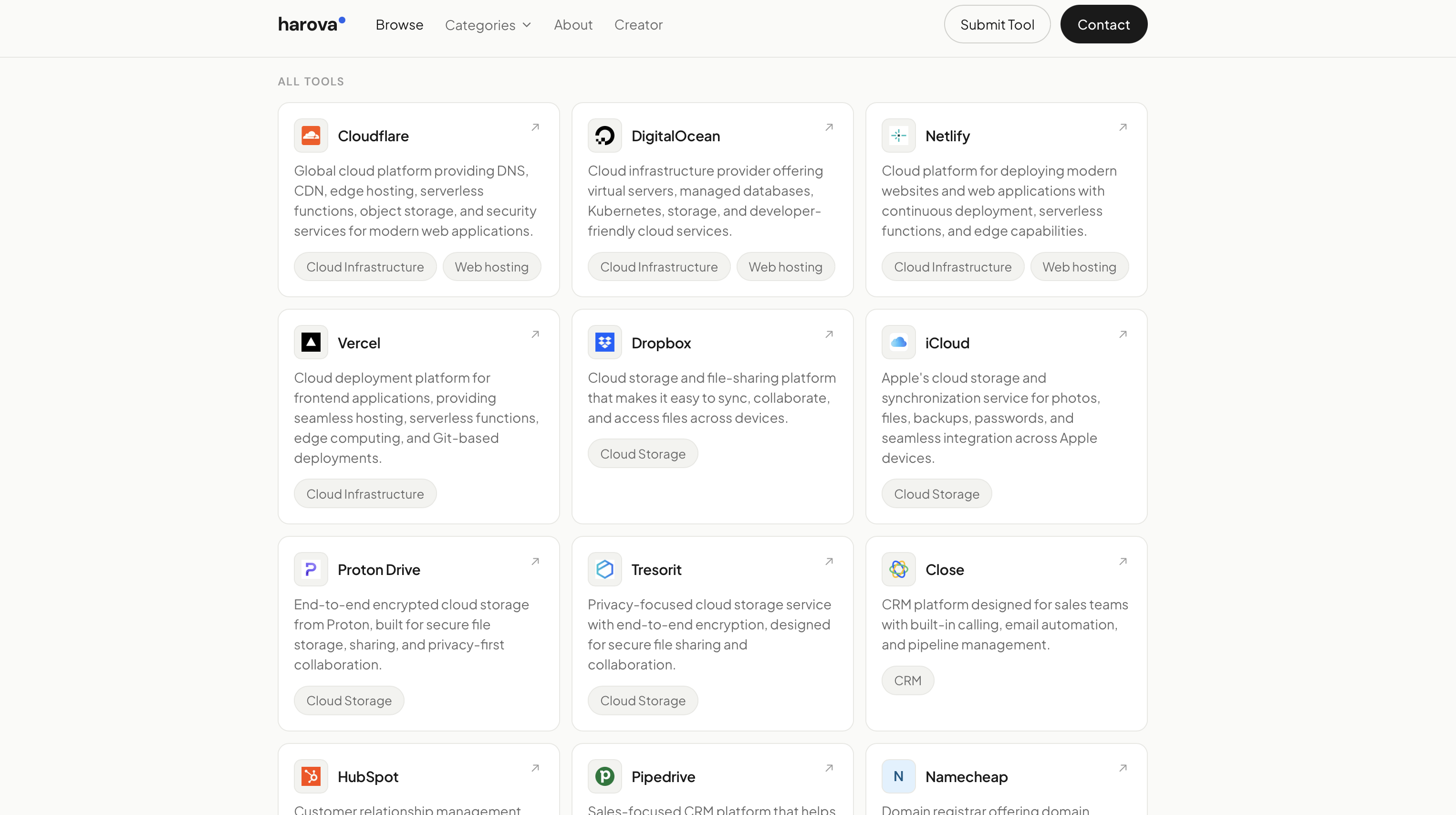
I've added ZERO in at least three weeks. The reason is simple: I chose to push my docs editor app first and go for single focus instead of jumping between projects.
That trade-off paid off, so I don't feel like the neglect set me back. Harova is a simple directory I built for fun, but I still made a commitment to it, and I need to stick to it.
Read also: I built a directory, probably four years too late, but I don't care.
Everything else I have (and it's a long list) stays shelved until my flagship MVP SaaS is ready, which I've now confirmed it is.
Neglect or priorities?
I won't make excuses for what I neglected. But I also set my mind on other priorities, and that comes with a certain amount of auto-neglect elsewhere.
While I was optimizing my docs editor SaaS, I had to fight through a handful of bugs in my custom dashboard, which is now built exactly the way I need it for my own workflow.
That means I have more free time again, and I can slowly start breaking the patterns and catching up on what I've let slide.
I'm going to stick to the list and planning from my previous update, because the moment I start deviating, I lose focus or end up dabbling in things I'm not supposed to be touching.
On top of that, my hands are already full with content planning, social media planning, and building out a marketing strategy for my SaaS.
Going slow now to go faster later
Knowing my own limits right now feels like a genuinely good thing. It gives me a benchmark for the future, and it keeps me from disappearing down a rabbit hole and losing the thread entirely.
Read also: Did I Fall Into a Builder’s Rabbit Hole With Claude AI?
The principle I'm working with is that going slow now is what lets me go faster later. By deliberately stepping back in a few areas today, I give myself room to re-optimize that imbalance soon, possibly in September, even with recording my B1-B2 English stories and my podcast journal on the calendar too.
Single focus is the whole point of this. Every project I didn't touch this month is one less thing pulling attention away from the one that needed it, and that's the trade I'm choosing to make on purpose.
I have full faith in this approach. And worst case, if it doesn't hold up, I bring someone on to help carry the load.
AI can move mountains, but it isn't going to solve my daily workload at scale on its own. At some point, that still comes down to a person.
Get new posts before anyone else
No noise, no automation sequences. Just what I'm writing, thinking about, and building, sent when there's something worth sending.
An email once in a while. Unsubscribe anytime.

Written by
Pieter Borremans
Writer·Content creator·Founder
Based in Taichung, Taiwan and London, UK, this is Pieter's personal journal and builder's blog: field notes on entrepreneurship, solo business-building, and the unfiltered reality of creating online. Alongside it, he's chasing one absurd goal in public, $168M USD in lifetime earnings, tracked live from zero.