
How to manage 4 different podcast channels? I am figuring it out right now.
I'm on track to do the shit I'm supposed to do this month, which three weeks ago wasn't obvious at all. I'd gotten into an argument with myself over the positioning of Study Brew and Story Brew, one that nearly talked me into cutting a channel I shouldn't have touched.
Once I sorted that out, I turned my focus to planning content, building a buffer, and putting together a timeline that made sense.
I thought I had it figured out. Then today happened, and I understood, properly this time, how much weight sits on the recording side of content creation. Not writing. Recording.
Four different channels, four different purposes, four different audiences.
The four channels
I've mentioned each of these before, but here's the clearest breakdown I've put together so far, because from September I'm doing all of this alongside building, fucking around with Xcode on a Mac app, and looking after BETA users for my flagship SaaS.
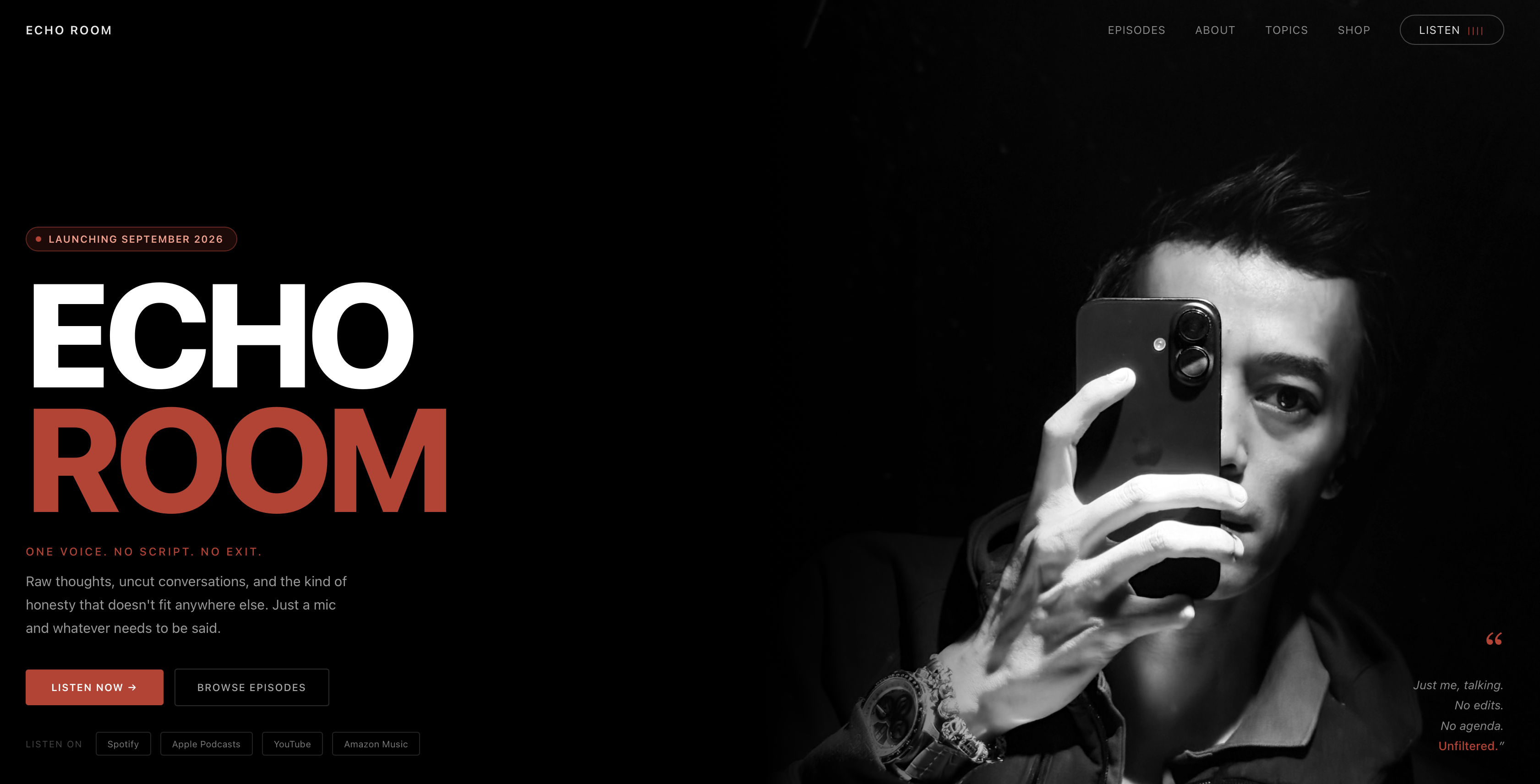
Echo Room is the new one. Raw thoughts, uncut, me talking out loud in monologue form about one topic at a time.
My personal audio journal is the other new habit, two or three short recordings a week, low friction, and a good counterbalance to how much I write.
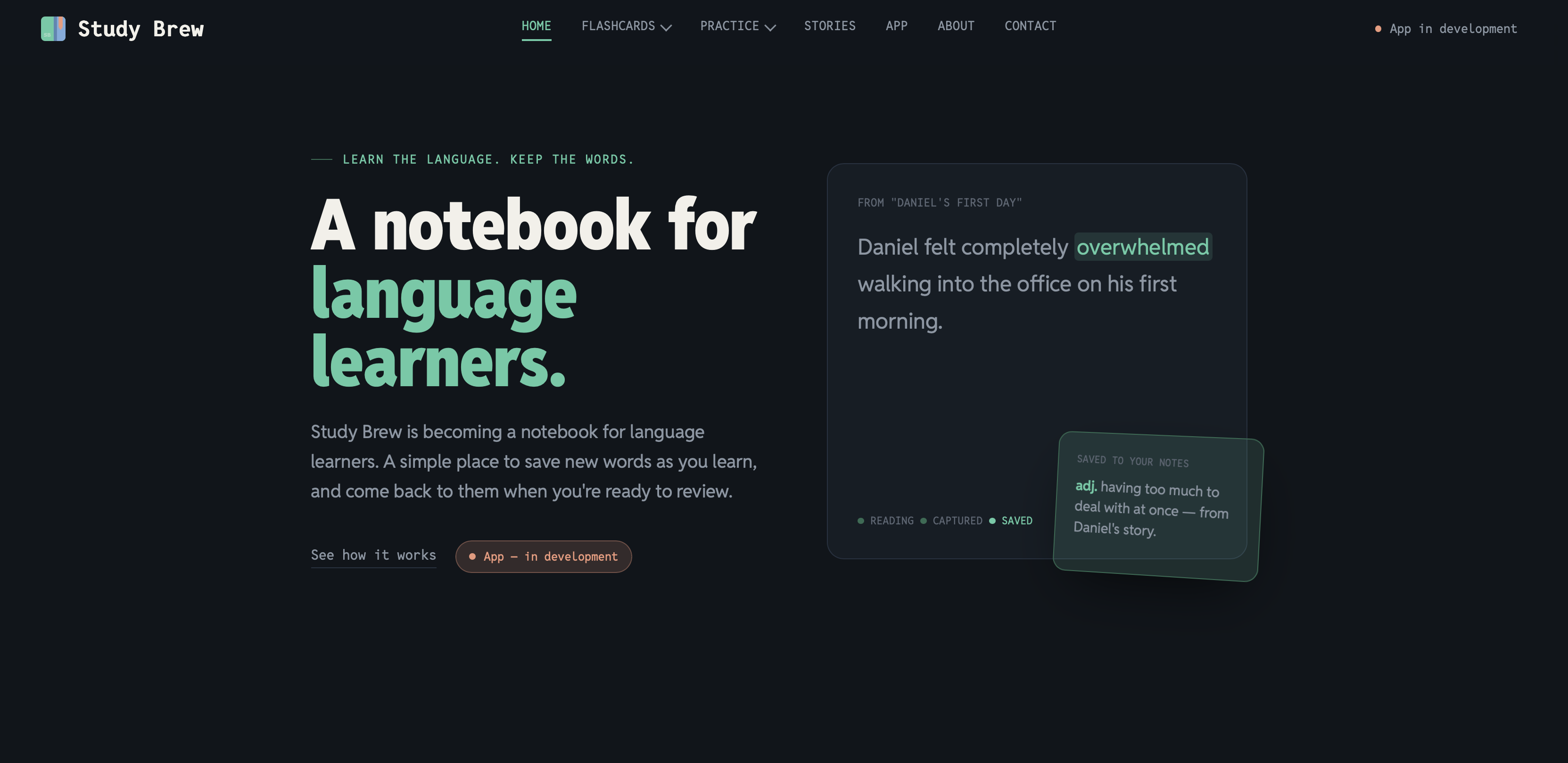
Study Brew is the broader brand sitting over all of this, aimed at English learners around a B1 to B2 level. Story Brew lives inside it as its own thing, the bedtime stories for that same audience, and it's where all of this started.
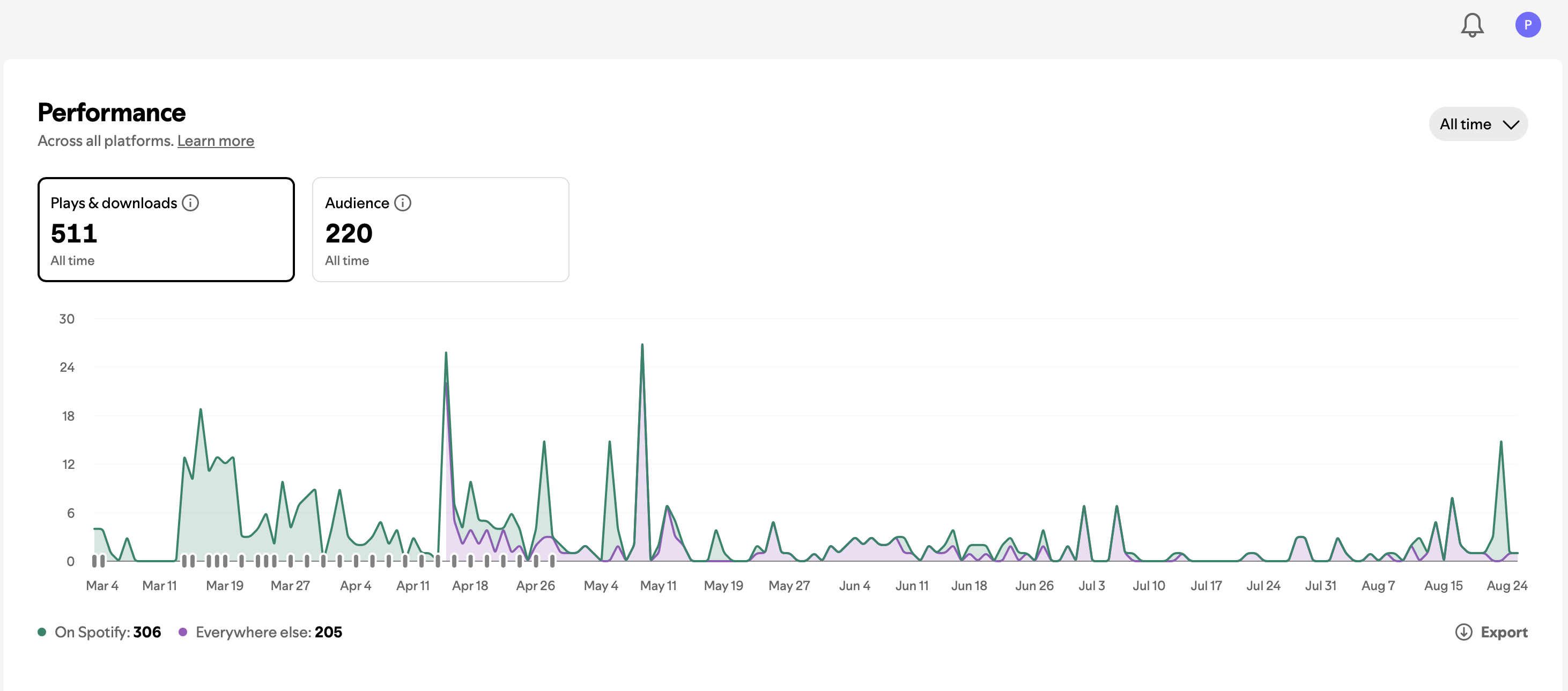
I almost fucked that up entirely a few weeks ago, cutting it outright, until I looked at the Spotify numbers and realized how wrong that call would have been.
Doing the math on a week
When I added it all up in my head, I asked myself if I could handle it, on top of everything else I'm supposed to be doing. For a second, that stopped me.
But writing it down here, as a kind of mental note, is what helps me restructure and think it through. If I'm writing about it, I'm working through it.
Here's the math:
There are seven days in a week. I don't work on Sunday unless something's on fire or there's another stupid website I can build that now pulls in most traffic.
And I've set a hard rule that I code a maximum of five days a week, or however many days it takes to hit eighty percent of my Claude weekly limit, whichever comes first. That leaves one day fully open, plus whatever hours I can pull from weekdays when I don't have the bandwidth to sit in front of Claude Code.
Read also: Hitting my Claude weekly limit again. Another pivot to balance life and work.
None of this is complicated production work either. There's no crew, no guest coordination, nothing to schedule around other people, because there isn't anyone else involved. That alone makes the whole thing more manageable than it sounds.
Rating the difficulty
I looked at each channel by effort, on a scale of one to ten. Echo Room comes in at an eight, because it's a format I haven't built muscle memory for yet. The personal audio journal sits at a two, all ad-hoc, zero prep.
The stories land around a five, mostly because I need to keep track of characters and details from earlier episodes so nothing contradicts itself.
Length follows a similar spread. Echo Room runs close to thirty minutes an episode. The personal journal stays short, five to ten minutes. The stories sit near that too, eight to twelve minutes at most.
Recording isn't the hard part
I did a lot of recording for Story Brew back in March and April, and that's when I nailed the workflow and later on built my entire recording flow in my custom-built dashboard.
Recording was never the bottleneck. What eats the time is everything after it: thumbnails, documentation, and getting episodes out beyond Spotify, which already feeds Apple and Amazon Podcasts.
Once I looked at it that way, the math got a lot friendlier.
I can record fifteen bedtime stories in a single afternoon, enough to cover thirty to forty-five days.
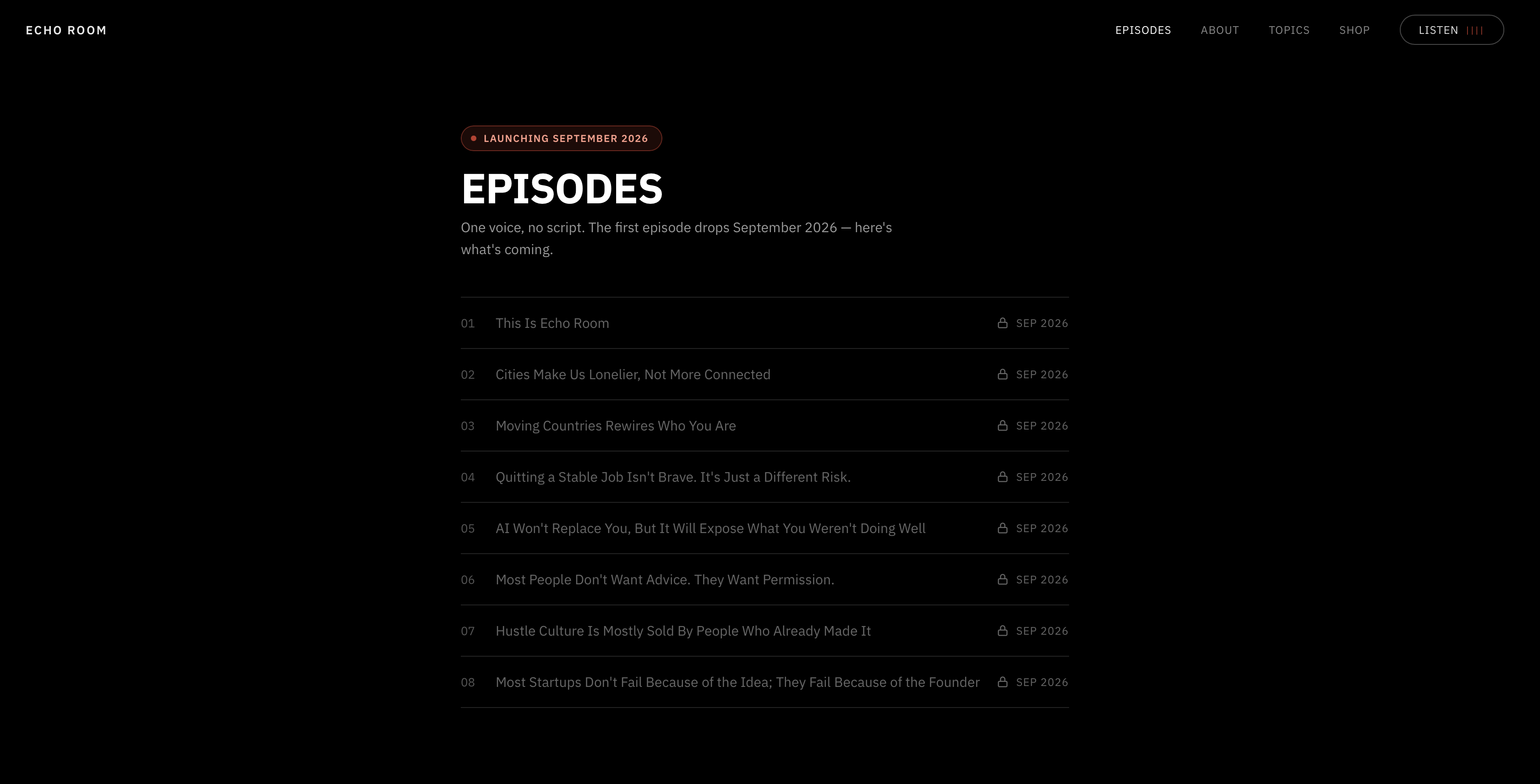
I can set aside one day a month for Echo Room, batch four topics in one sitting, and publish one a week from there, starting with the list below.
The only channel with real friction is the personal audio journal, but I've stopped giving a fuck about its frequency. I treat it exactly like this blog: no fixed topic, no schedule to defend.
Why it works (for me at least)
Once I broke it down like this, managing four channels stopped looking like a burden and started looking like a plan I can stick to. I'm not deviating from it. I am usually a very disciplined person, even though I pivoted a few times this year, but that's because I wasn't set on my trajectory. (now I do)
Part of that comes down to a decision I made a while back: to take content creation seriously as its own thing, not just a side effect of building software.
I want reach and an audience that doesn't depend entirely on a vibe-coded SaaS app doing well. Study Brew and Story Brew are also the foundation for the note-taking app I'm building for language learners, so none of this sits apart from everything else I'm working on.
The part that surprised me most is how much I enjoy the recording itself. Managing four channels sounded like a chore until I broke down the scope and impact of each one, and now it doesn't feel like one at all.
My 2026 roadmap is on track, Story Brew's numbers already proved the concept works, and I'm genuinely looking forward to building Echo Room on top of everything else.
Verdict: One day's work each month to build a better brand? I'll take that.
A plan that finally adds up, and I am ready for September 2026.
Get new posts before anyone else
No noise, no automation sequences. Just what I'm writing, thinking about, and building, sent when there's something worth sending.
An email once in a while. Unsubscribe anytime.

Written by
Pieter Borremans
Writer·Content creator·Founder
Based in Taichung, Taiwan and London, UK, this is Pieter's personal journal and builder's blog: field notes on entrepreneurship, solo business-building, and the unfiltered reality of creating online. Alongside it, he's chasing one absurd goal in public, $168M USD in lifetime earnings, tracked live from zero.