
My MVP is ready. I still don't have a marketing plan.
As the title says. And by design, I wasn't going to think about marketing or client acquisition until I finished the final stages of my docs editor MVP.
I've mentioned rough directions in past posts, but nothing concrete. I'd rather write this stuff ad hoc, in public. That way I can document it, hold myself accountable, and have a reference for where I was wrong, right, or where I ended up pivoting.
I also have a few concerns, but I'll get to those.
Context
I've been out of the traditional business game for years now. I never planned to build anything close to a startup. After a five-year hiatus, my whole goal was to build a micro private equity firm: acquire small projects, hold them as permanent capital, and let them compound.
That plan went south. In 2025, I wanted to take a more relaxed route and become a full-time blogger and content creator. That shifted again in April and May 2026, once I dipped my toes into vibecoding, and I kept building from there.
After some clumsy early moves and getting used to thinking more like a developer, I finally got a flagship product off the ground after dozens of iterations.
Ironically, I've now built over a dozen small apps, and the first one I started became the one I ended up putting the most time into. That led to a single focus in August.
Now that I'm ahead of schedule, I had to sit down and think about a marketing plan, because right now I have jack shit.
Where do I even start?
Honestly, I'm a bit out of touch. The last five years turned the tech world upside down. Startups get built by the second now, content marketing isn't what it used to be, and generative AI search dominates most of Google's results. My first instinct was that traditional methods might just be outdated.
But I isolated that fear and looked closer. I recently had a conversation with Google's AI assistant about this blog and its content, and it confirmed something I wanted to hear:
Traditional blogging still works, especially for journals like mine, ones that avoid overengineered SEO and stick to a healthy mix of topics with clean search intent.
That intent is what sends a strong signal to search engines about what your website, product, or SaaS is about.
Traditional marketing and SEO haven't lost their value. I still believe that. I don't know the fancier methods. The growth hacks and paid funnels and whatever this year's version of that is, so my approach stays traditional for now.
It's not the most exciting plan, but it beats doing nothing, and none of it risks putting me in a hole that will be hard to crawl out of.
Since I consider myself old school anyway, I'm going to lean on traditional ways of acquiring customers first, before touching anything more experimental that would just slow me down.
But I'm not looking forward to this part. Content and SEO, followed by distribution on channels like Pinterest, are not my forte. I'm fine writing content. I'm bad at planning social media content, for real.
Read also: I need a social media content plan, and I suck at planning it
But that's a price I'm willing to pay. I chose this, and I'm okay having zero paying customers for three years if that's what it takes.
I'm not into aggressive marketing, and I have no financial pressure to make this work from day one. That's an advantage. I can build the basics, treat them as pillars, and grow the product's reputation slowly instead of forcing it.
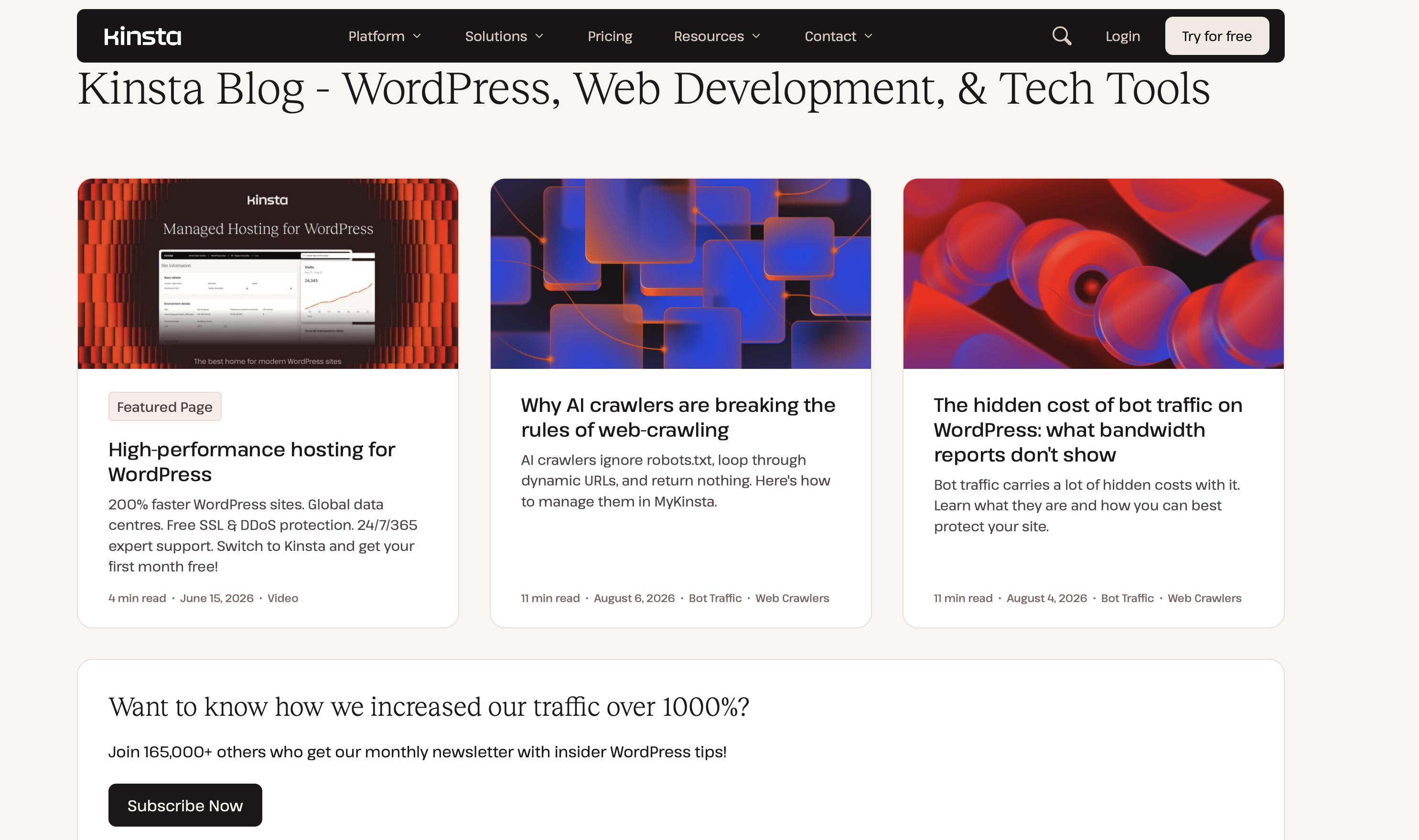
So SEO comes first, Pinterest comes second for distribution. I still believe in good content. I watched how Kinsta dominated search for very specific use cases, and that's the model I plan to follow.
Beta invites
I built the docs editor without market validation, purely because it solved a problem for me first. I'd have been fine being the only user forever, since it was built around what's missing in the market and where I think the iPad market is headed.
But I still want to launch something that works for other people too, not just me.
So I'm taking a slightly more direct approach. I'm inviting 50 beta users who are willing to give feedback, report bugs, and share what they find. In return, they get lifetime access and get grandfathered into every future update.
I'm betting that the beta invites bring in some early traction, and that at least one or two enthusiasts turn into organic advocates without ever meaning to.
Does cold email still work?
Years ago this worked well for me. Now I'm not so sure. Cold email is hard, and inbox fatigue is real. People delete anything that smells like AI the second they open it, or they're just tired of another unknown startup sliding into their inbox.
I'm putting that strategy on hold for now and waiting to see how the beta invites go first.
My biggest strength is also my weakness
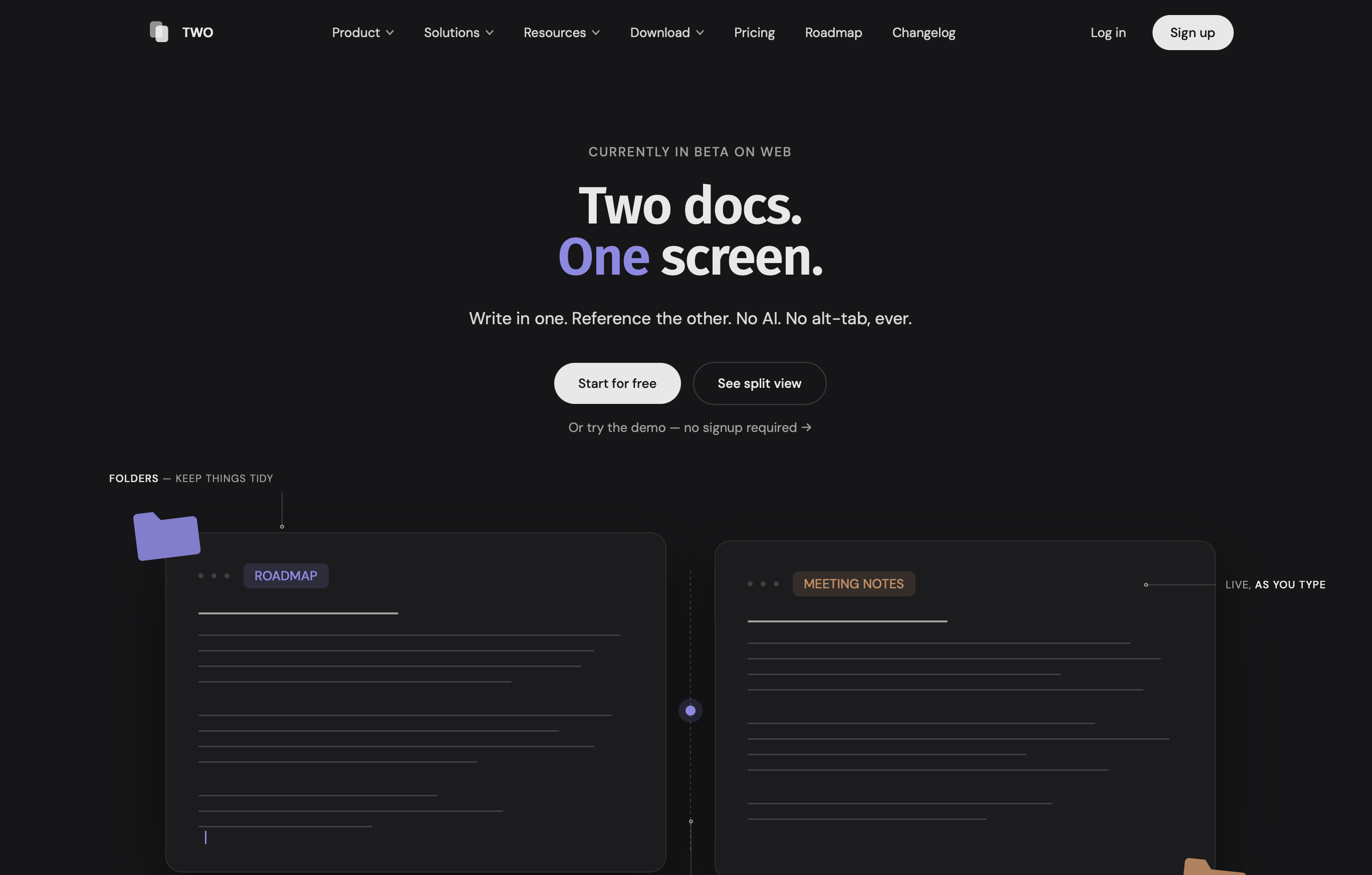
What I've built is extremely boring. It's a docs editor, with the end goal of a native Mac and iPad app. It's built for writers, bloggers, creatives, and small teams.
But unlike almost everything being thrown into the market right now, mine has no AI. Nothing powered by AI, no AI infrastructure bolted on for the sake of it. I used to think that was my biggest weakness. Now I think it might be my greatest strength.
There's a real niche of people who don't want AI shoved into everything they use. Split view docs, minimal and focused writing, no AI, built for iPad users once the app is done: that might be the real angle.
I've watched hardcore Notion users leave the platform because AI features got pushed on them aggressively and they never asked for any of it.
What I need now is a strong story built around those features, one I can go all in on once the iPad app is done.
My ICPs, kind of
The product fits a few different target markets, and I'm never going after the massive user bases that Notion, Nuclino, or ClickUp already own. That was never the plan.
My main ICPs are creatives, writers and bloggers, solo founders, and small teams. I can relate to every one of them. I consider myself a creative, mostly through podcasting, and building moodboards and inspiration walls is part of my routine.
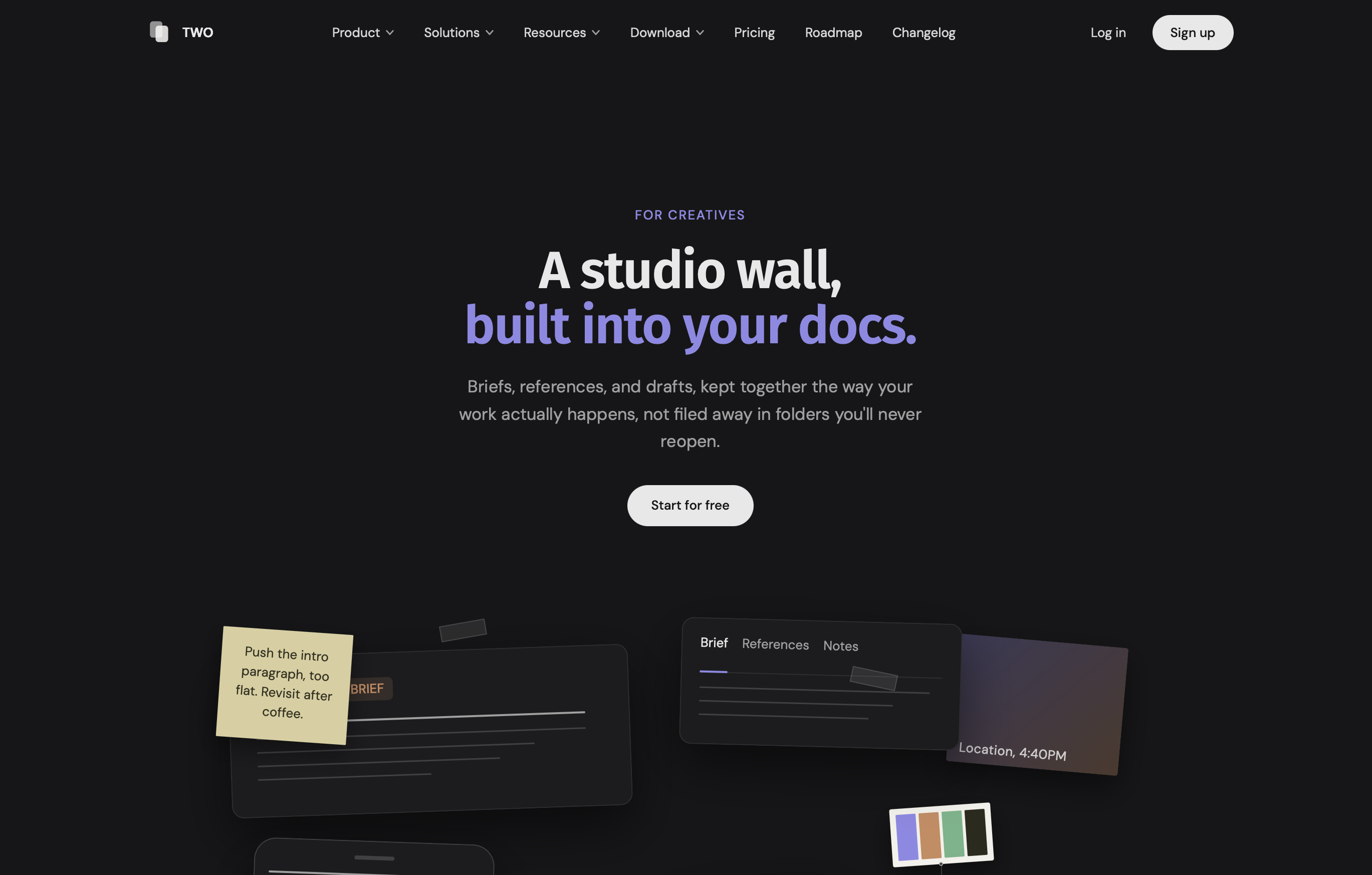
I'm a blogger who writes daily across several sites, which is the reason I started building TWO Docs in the first place. I've been a solo founder for twenty years, and whenever I scaled up my old SaaS, I always ran it with a small team.
Fitting into every bracket helps. It means I can write content for each target group from real, personal experience instead of guessing.
Still, I'm not going after all of them at once. My instinct says start with writers and bloggers, and build outward from there, backed by a real promise to ship the iPad app.
Writers and bloggers who use an iPad Pro as their daily driver are a sharper niche than just writers in general.
The story has to hold together, and this feels like a solid base to build a long-term way of acquiring customers organically.
The tradeoffs
This looks good on paper, but I know what it's going to cost. Pushing my flagship product in front of people is close to a full-time job on its own.
That means less blogging here for a while, and rebalancing across the other blogs I run so TWO Docs' own blog gets more attention first. My goal is at least 12 to 20 pieces of content on that site, then settling into one piece a week.
Luckily, audio content picks up some of the slack starting in September, so this blog should stay at roughly the same pace overall, just with a different mix, maybe leaning into lighter posts here: movies, personal stuff, whatever isn't strictly work.
Read also: Echo Room: I'm Launching a Long-Form Podcast
Final note and goals
My marketing approach isn't groundbreaking. It's not supposed to be. I'm not into automation, spamming inboxes, or sending hundreds of LinkedIn DMs that read like AI junk and add nothing to anyone's day.
Going back to basics gives me clarity, and I'd rather sharpen a simple strategy than chase a complicated one I don't fully understand yet.
I don't know the fancier growth methods, so for now I'm sticking with what I do know. It's slower, but it costs me nothing to try, and there's no version of this where doing it loses me anything I didn't already have.
I know the markets I'm going after are neither easy nor loyal. But my goals aren't ambitious. If I end up with 170 paying monthly users, I'm happy.
I'll explain that specific number in a future post, but I want to be clear that it's not some impossible target, and I'm not fooling myself into thinking I'm reinventing the wheel or building the next unicorn.
Right now, I want to ship the beta, see who shows up, and figure the rest out from there.
Get new posts before anyone else
No noise, no automation sequences. Just what I'm writing, thinking about, and building, sent when there's something worth sending.
An email once in a while. Unsubscribe anytime.

Written by
Pieter Borremans
Writer·Content creator·Founder
Based in Taichung, Taiwan and London, UK, this is Pieter's personal journal and builder's blog: field notes on entrepreneurship, solo business-building, and the unfiltered reality of creating online. Alongside it, he's chasing one absurd goal in public, $168M USD in lifetime earnings, tracked live from zero.