
Warmwind wrote back, and here's my honest read
They didn't find my last post about Warmwind on their own. I sent it through their feedback form and replied again to their beta invite email. Two people from the team wrote back, and I'm glad they did.
One asked me to take a closer look at the website again, which I did. I'll get to what I found. The other told me the team spent an hour in a meeting debating the points I raised, and they ended up agreeing with my read.
That's worth mentioning on its own. Most startups would brush off a random blog post from a stranger. Warmwind treated it as something with real weight for where the company goes next.
As I've written before, I want to see more European and Asian startups win, so the market depends less on US giants and has real leverage of its own. Warmwind is a German company building an AI agent platform, and it's exactly the kind of company I want to see succeed.
So I went back through their site with that in mind.
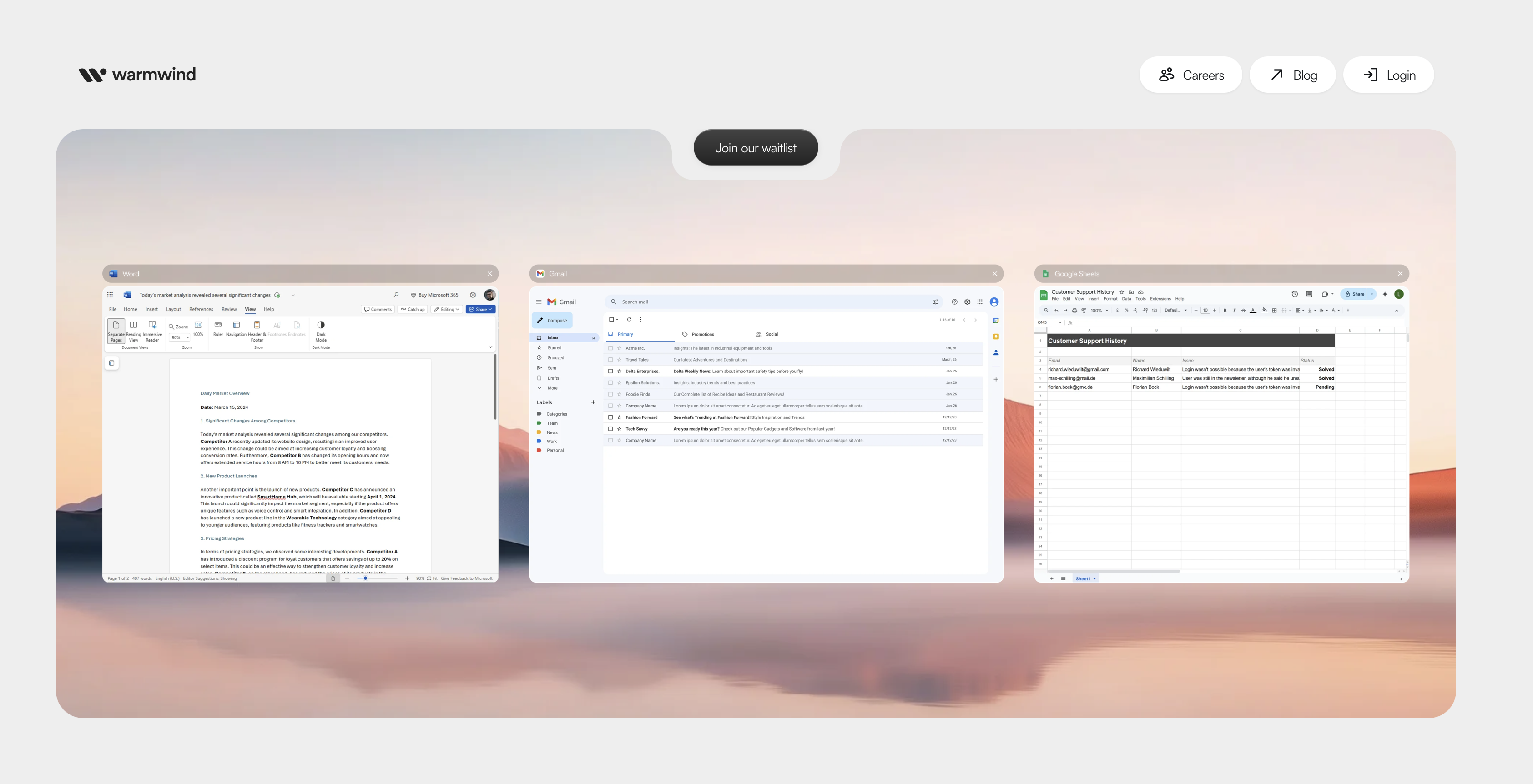
The good news: I remembered why I signed up for the beta waitlist in the first place, and how much potential this product actually has.
The bad news: I still think there are a handful of things worth fixing.
A note before I start
Everything below is speculation. I don't have access to Warmwind's internal numbers, and I could be wrong on any of it. If I am, I'd genuinely welcome the correction.
Funding and runway
Warmwind announced a 1.5 million euro pre-seed round and opened invites this week, so I did some rough math. Most startups raise for 18 to 24 months of runway. Looking at their team photo of roughly 15 people, they're probably burning somewhere around 60 to 70K euros a month on payroll alone.
Take the lower end: 60K a month, times 12, and that's close to 720K euros a year on staffing, which is almost half the pre-seed round gone before you factor in anything else.
Add R&D, AI infrastructure costs, hardware, rent, and office space, and total burn easily clears 1 million a year. That points to something in the range of 6 months of runway left to make this work.
If that estimate is close, they're likely shifting from product focus into sales, and they'd need to be pulling in something like 2.2x their monthly burn to stay ahead of it.
Based on the beta invite email, where one team member described the response as overwhelming, my guess is things are still a bit reactive rather than fully planned out.
Either they're already raising again, or they have a tight path to revenue that closes the gap. If it's the former, they should have started the process already.
Term sheets and VC deals routinely take 3 to 9 months depending on complexity, and 6 months of runway doesn't leave much room for that timeline to slip.
Positioning
This was the hardest part to pin down. Most SaaS companies make their positioning obvious within seconds: B2C, small team tool, or enterprise-grade for larger organizations. With Warmwind, I couldn't tell.
That's a real friction point. There isn't enough clarity on who this is for, and if I were advising them, I'd push hard for a tighter ICP before expanding further.
Part of the problem is scope. The product spans customer support, recruiting, and social media growth management, and the more features I saw, the less certain I was that I'd need all of them.
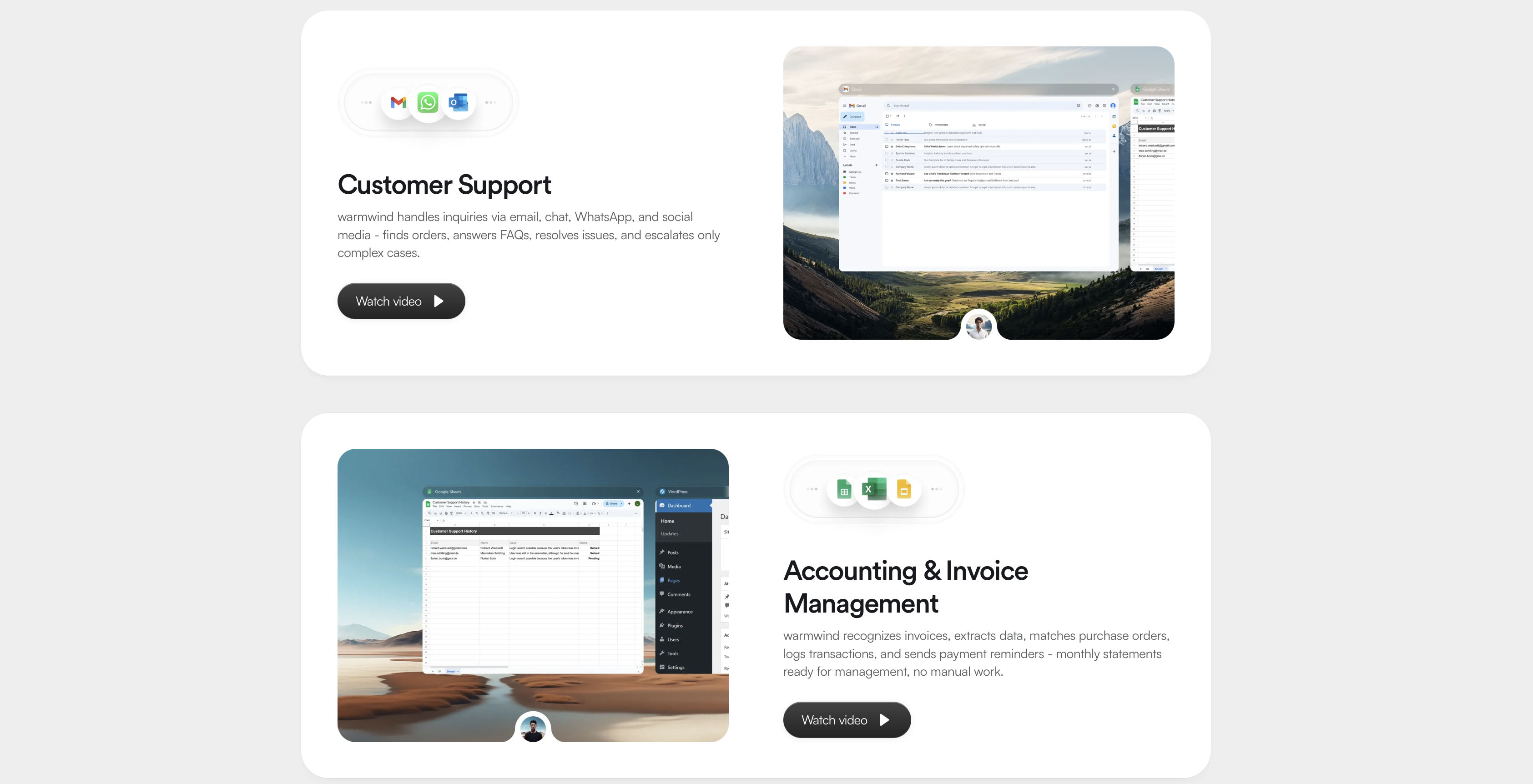
Speaking for myself, I'd only need the customer support layer, and I'd pay well for that specifically, because it cuts a real cost. The rest isn't relevant to me.
My guess is B2B is the intended market, but B2B sales cycles are long by nature, and they get longer when a buyer has to rework their internal playbook, account for switching costs, and train a team on a new platform. Narrower positioning would shorten that cycle considerably.
Pricing
Current pricing is 24 euros billed weekly, which works out to roughly 96 euros a month. I've seen people push back on that weekly framing online.
I'd actually defend the number. It's not aggressive, and if the product delivers what it shows, it's underpriced.
For comparison, Ahrefs' entry-level SEO plan starts around $129 a month, and thousands of professionals pay $249 a month for their mid-tier plan because they understand the value. Different vertical, same principle.
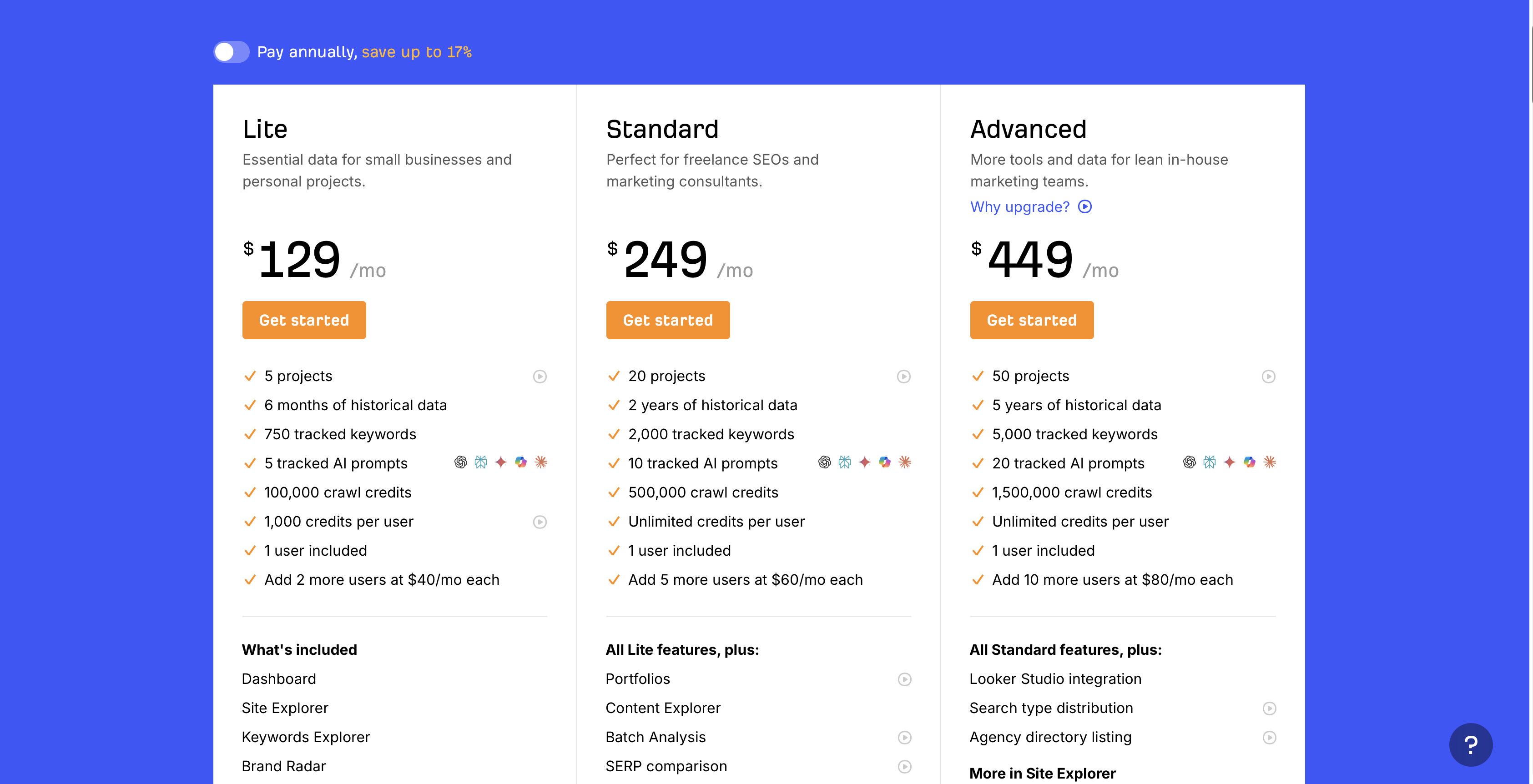
If anything, Warmwind is leaving money on the table. I'd reposition toward the enterprise end: something closer to 125 euros a month for a lite plan, and a 300 to 500 euro tier for mid-level B2B accounts.
Who I'd target
If I were running go-to-market here, I'd focus on three segments:
Recently funded startups, Series A and above, raising at least 2 million euros. They can absorb the cost of a tool like this and use it to cut customer support and social overhead early.
SMEs going through a transformation or efficiency push while still wanting human-in-the-loop support, particularly in e-commerce, retail, and other non-regulated sectors open to new tooling.
Larger B2B accounts willing to commit thousands of dollars a year, billed annually, so revenue is predictable and runway isn't dependent on monthly churn.
Go local first
I wouldn't stop at segment. Warmwind is a German company, and in my experience, German buyers trust German vendors more than most. I'd put serious weight behind Frankfurt, Hamburg, and Berlin specifically.
Pitching in the local language removes a layer of friction most founders underestimate, and there's no time zone tax either. Meetings can happen in person or over video without the coordination overhead of an international sales motion.
There's a pattern I see often with early-stage companies: the instinct to go global from day one, when the strongest early revenue is usually sitting in your home market, especially when that market is a Tier 1 economy like Germany.
The story problem
I think the biggest gap right now isn't the product. It's the storytelling. I rewatched every video on their YouTube channel, including the 30-minute walkthrough, and while the content itself was clear, it felt fragmented rather than building toward one narrative.
I'd restructure the YouTube approach entirely and go deep on each feature individually. That gives the team a real benchmark to work from.
If nobody engages with the invoicing feature but everyone responds to the customer support automation, that tells you exactly where to focus the pitch.
Marketing is storytelling, and right now Warmwind doesn't have a strong enough story to convert any one target market. Even without a full pivot, the website needs dedicated landing pages built around specific niches, because right now there aren't enough of them, if any.
An idea on outreach
Here's where I'd get a little unconventional. We're deep into an AI-driven moment in tech, and everyone is leaning into that.
I'd do the opposite.
Instead of another cold email, I'd send physical, handwritten invitations for a sales call or demo. German recipients are more likely to open a real letter, and the irony works in Warmwind's favor: a fully AI-native platform reaching out by hand.
That contrast alone would separate them from every other SaaS company sending the same automated sequence, and it gives the story something worth talking about.
Where this leaves things
All of this is speculation built from public information, and I could be reading the situation wrong. My honest guess is that the team has been so focused on building the product that marketing it properly slipped down the list.
If I were advising them directly, I'd lead with hard numbers on the website: how much money a company actually saves, not just a demo of the automation itself. That's how Superhuman email convinced me. They mentioned you could save 4 hours per week in email triage and inbox management. In fact, I was closer to 7 hours when using their platform.
B2B buyers respond to numbers more than polish. And if the runway estimate is anywhere close to accurate, meaning 6 to 8 months left, this is the window to go all in on repositioning, pricing, and a sharper story before that runway runs out.
All in all, I want them to succeed. I root for European startups, and I am open to any notes the team would provide.
Get new posts before anyone else
No noise, no automation sequences. Just what I'm writing, thinking about, and building, sent when there's something worth sending.
An email once in a while. Unsubscribe anytime.

Written by
Pieter Borremans
Writer·Content creator·Founder
Based in Taichung, Taiwan and London, UK, this is Pieter's personal journal and builder's blog: field notes on entrepreneurship, solo business-building, and the unfiltered reality of creating online. Alongside it, he's chasing one absurd goal in public, $168M USD in lifetime earnings, tracked live from zero.